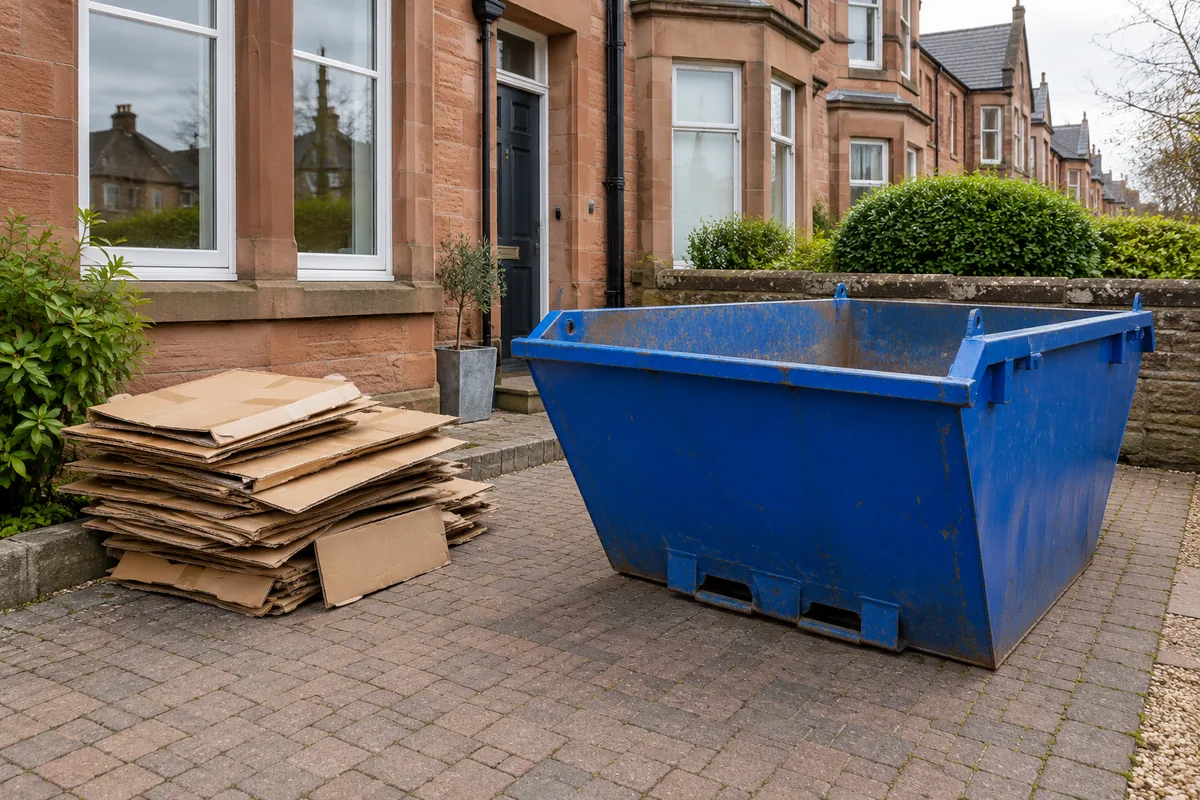
The right skip depends on what you are clearing, how much there is and where it will go. A few simple checks can help you avoid ordering too little space or choosing a large skip that is unsuitable for your waste.
Start with what you want to clear
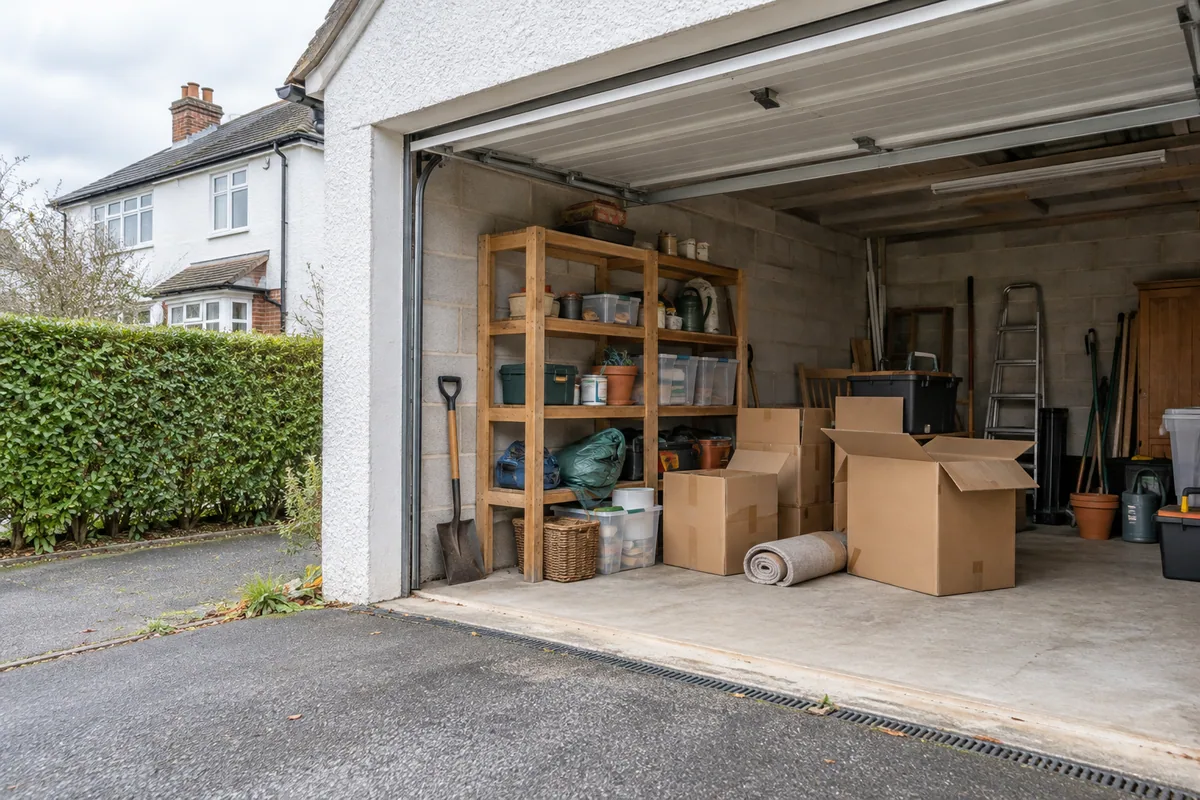
Walk through the rooms, garage and shed before choosing a skip. Make a list of the large items as well as the bags and loose rubbish. A wardrobe, an old worktop and a collection of empty boxes take up space in different ways. Include anything you expect to find behind furniture or at the back of storage areas, rather than judging the whole job from the first pile by the door.
Separate items that can stay, be donated or be passed on before deciding what needs disposal. This keeps useful things out of the waste load and gives you a clearer idea of the rubbish left. Keep personal papers, keys and small valuables away from the clearing area. If several people are helping, make sure they know which items are going and which must be left alone.
Think about space and weight separately
Skip sizes are described in cubic yards. This tells you about the space inside, rather than the weight you are allowed to put in. Lightweight packaging can take up a surprising amount of room. Soil, bricks and broken concrete may look like a small pile but create a much heavier load. Tell the hire team about these materials before choosing a size, even if most of the job is an ordinary house clearance.
Bin-bag estimates are useful for comparing sizes, but the result depends on the bags, their contents and how tightly things can be packed. They are not a promise that every bag will fit, and they do not replace the agreed weight limit. Our Stirling skip-size comparison brings the options and approximate guide dimensions together, so you can narrow down your choice before calling.
Compare the smaller skips first
A 2 yard mini skip can suit a small amount of clutter, garden cuttings or waste from a modest DIY repair. A 4 yard skip gives more room for a single-room clear-out or a bathroom job. Look at the shape of the items as well as the amount: a bulky piece of furniture may be awkward to load into a small opening even when the rest of the rubbish is light.
For a bigger clear-out or a renovation, compare the 6 and 8 yard options. These offer more room for mixed household and agreed building waste. Neither should be chosen only because it happens to fit the driveway. Explain the full waste list, including heavy items and anything unusual. If you cannot estimate the amount confidently, describe the rooms and large pieces when you call rather than guessing a bag total.
Use larger containers for the right waste
A larger house, office or shop clear-out can create lots of light, bulky waste. The 14 yard skip and larger 20 and 40 yard containers may be worth discussing for this type of work. They need suitable access and space, and availability must be confirmed for the address. A larger container is not permission to fill it with heavy rubble or soil; the contents and loading limits still need to be agreed.
If you want help lifting items, a skip may not be the most convenient choice. Our rubbish removal service in Stirling includes loading the items agreed in the quote. Read how skip hire compares with rubbish removal if you are deciding between filling a skip over time and having a prepared load collected in one visit.
Make sure the delivery can reach the spot
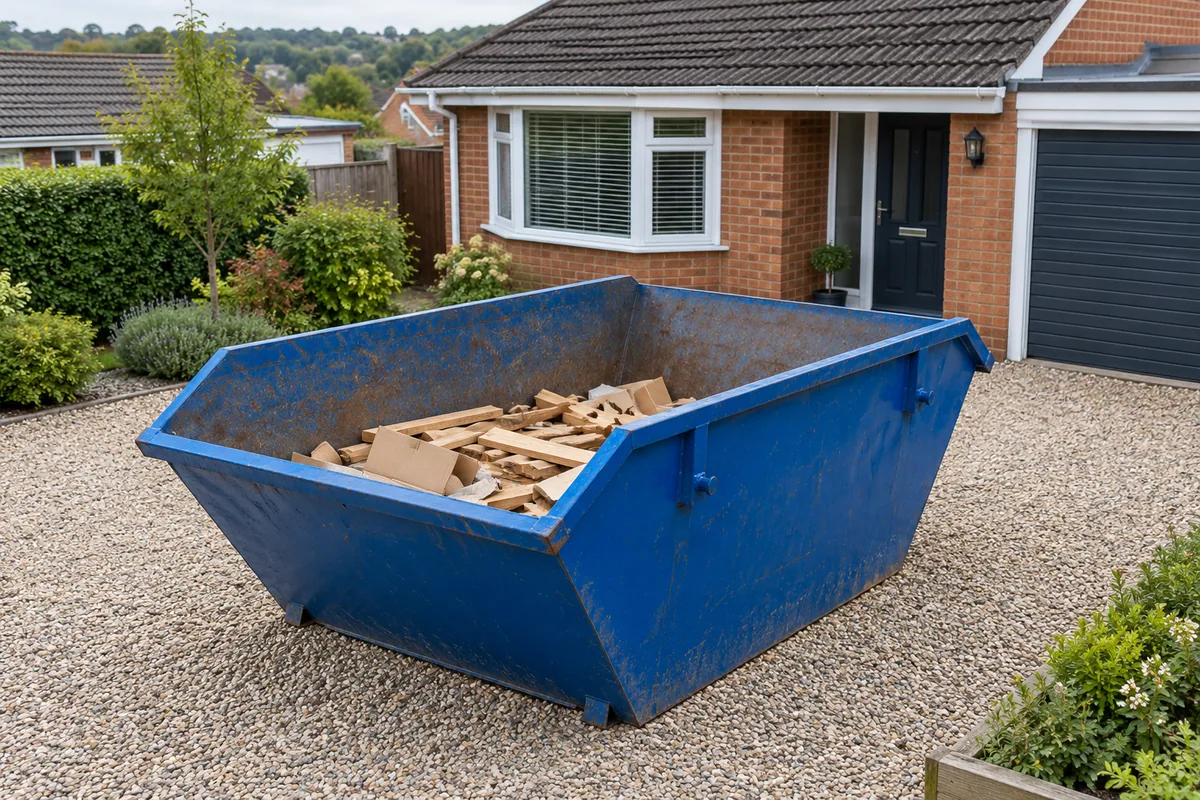
The outside dimensions of a skip do not tell you all the space required by the delivery vehicle. Gates, parked cars, tight bends, overhead cables and soft ground can affect where it can be placed. Measure the available area and describe the approach when booking. Keep entrances, shared access and places people need to walk clear. Do not assume the driver can lift a skip over a wall or place it exactly where another supplier once did.
A skip on private land is different from a skip left on a public road. Council permission is needed for road placement before delivery, and the arrangements depend on the location. Tell the team early if you do not have a suitable private space. Our guide to preparing for skip delivery explains the practical points to sort out before the lorry arrives.
Get a quote that covers the whole clear-out
Have your postcode, waste list, preferred delivery date and likely hire period ready when you call. Mention stairs or carrying difficulties if you are also considering a collection service. Ask for the full price including VAT, the agreed waste, hire length and any permit or extra charges. This makes it easier to compare options on the same basis rather than comparing two prices that cover different jobs.
Before filling, read what can go in a general waste skip. Keep electrical items, paint, batteries and other restricted materials separate, and discuss plasterboard, mattresses or carpets in advance. Keep the finished load below the rim. When the clear-out is done, call to arrange collection, leaving the approach clear for the lorry. A little preparation makes choosing and using the skip much more straightforward.