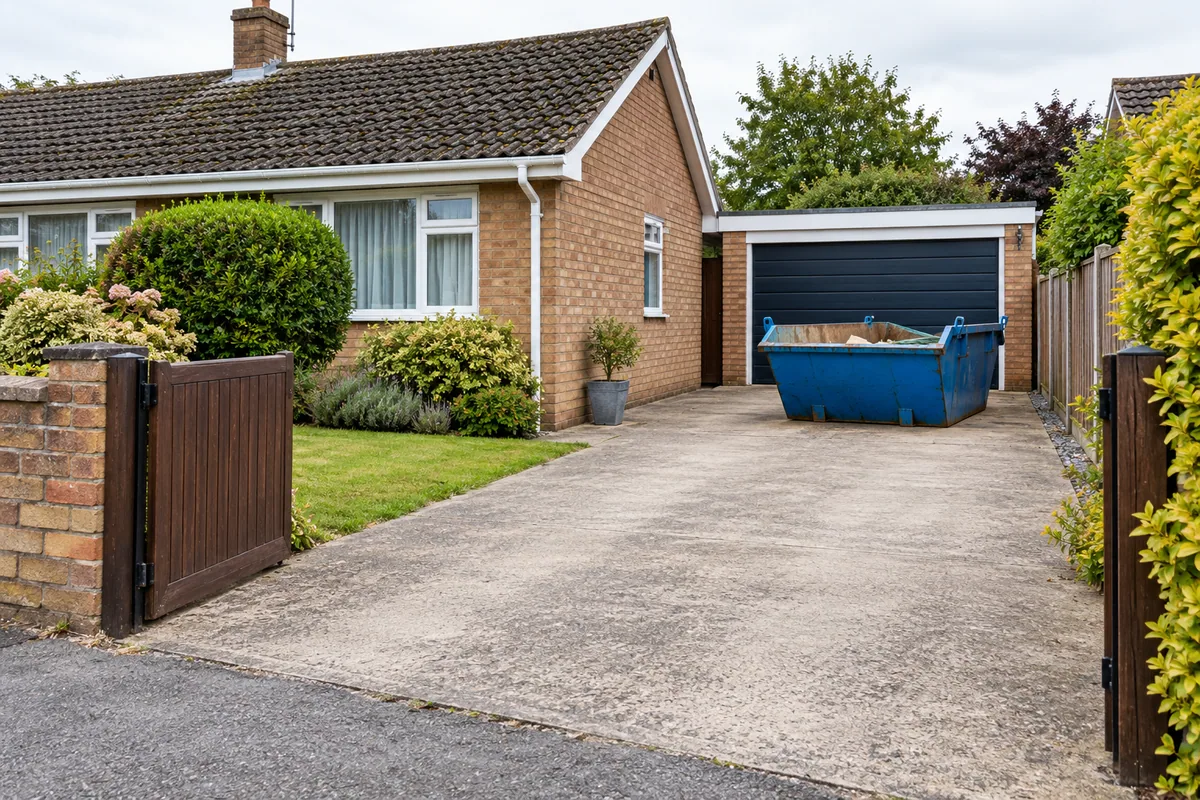
A little preparation helps the delivery go smoothly and leaves you ready to get on with the job. Start with where the skip will sit, how the lorry will reach it and the waste you have agreed to put inside.
Choose the position before delivery day
Pick a firm, suitable place with enough room around the skip to load it safely. Think about the doors, gates, paths and parking spaces you need to keep using while the skip is there. A convenient position for the first morning may become awkward if it blocks the garage or stops another contractor reaching the house. Shared access should be discussed with the people who use it before a delivery is arranged.
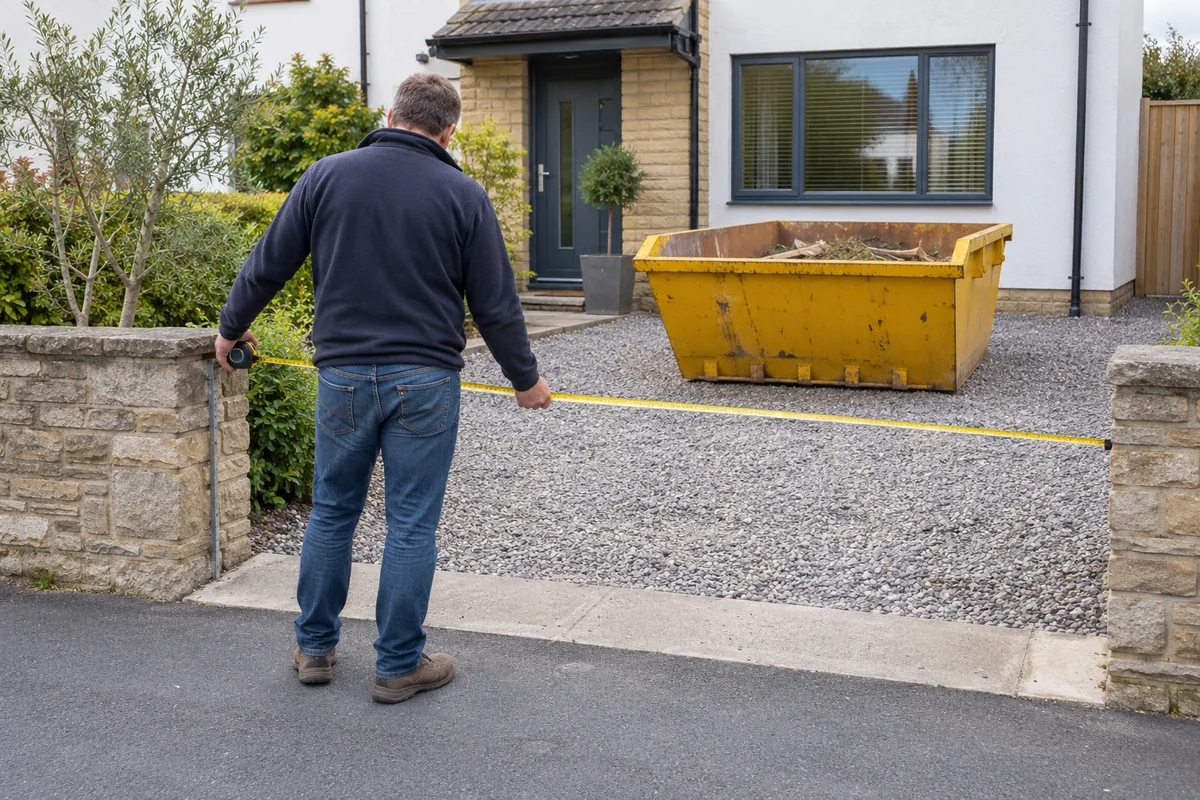
The approximate dimensions in our skip-size guide show the space occupied by the container. They are guide measurements because supplier shapes vary. The lorry needs additional room to approach and place it. Explain the surface and position when booking rather than assuming any driveway will be suitable. A heavy skip can affect the ground beneath it, so raise concerns about paving, soft surfaces or grass before agreeing the delivery.
Clear the approach for the lorry
Look at the whole route from the road to the intended position. Parked cars, narrow gates, tight turns, trees and overhead cables can affect access. Give the team a clear description before delivery, especially if the entrance is shared or the property is set back from the street. Do not wait until the lorry arrives to mention a low archway or an entrance that can only be reached through a locked gate.
Move vehicles and loose items out of the approach in good time. Make sure the person meeting the driver knows where the skip is meant to go and can open any gates. Keep children and pets safely away from the delivery area. If another trade will be using the driveway, agree the timing with them so equipment and materials are not left where the lorry needs to stop or turn.
Sort out road placement before booking the date
A skip placed entirely on suitable private land does not normally need a road permit. If it must sit on the public road, council permission is needed before delivery. Tell the hire team early so the application arrangements and any extra cost can be explained. Do not assume that a permit can be obtained immediately or that a previous permit for another job covers the new hire.
If road placement is not practical, discuss the alternatives. A wait-and-load service can suit waste that is ready to be loaded during an agreed short visit. Our rubbish removal service can suit a prepared collection where lifting and loading help is needed. Both still require safe access and a suitable stopping place. Read our comparison of skip hire and rubbish removal if you are unsure which arrangement fits the property.
Sort the waste before you start filling
Put aside things that should be kept, donated or reused before they reach the skip. Make a separate space for materials that need special handling. Read what can go in a general waste skip and tell the team about anything uncertain while booking. Paint, oil, batteries, gas cylinders, electrical items and suspected asbestos must not be mixed into a general waste load.
Plasterboard, mattresses and carpet need to be discussed in advance rather than added at the end of the job. Soil, rubble and concrete must also be mentioned because their weight changes the loading arrangements. If unexpected materials turn up while you are clearing, pause before putting them in. A short call is easier than having the wrong waste mixed through an otherwise suitable load.
Load within the sides and below the rim
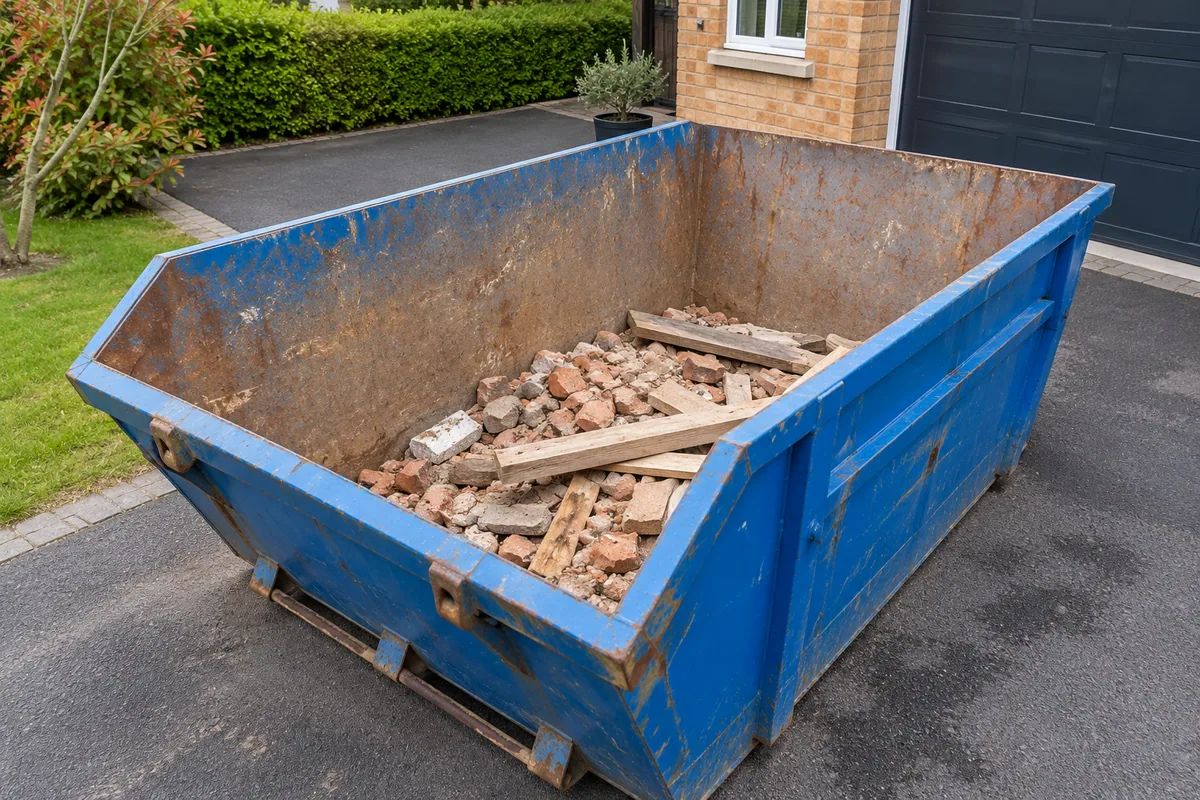
Keep waste no higher than the top rim and make sure nothing projects out of the sides. Do not build up the sides with boards to fit more in. A load that looks tidy from one angle may still have long timber, branches or furniture sticking out on the other side. Leave items that will not fit safely for another agreed arrangement instead of forcing them into the skip.
Use the available space sensibly with the waste you have agreed to load, but do not climb into the skip to compress it. Keep the area you carry through clear of loose objects and trailing materials. If the skip looks too small before the job is finished, call about the options. The guide to skip sizes for a house clearance can help you think through the amount before ordering.
Keep collection in mind from the start
When arranging skip hire in Stirling, confirm the hire period, how to request collection and any plans for an exchange. Standard hire is up to seven days unless another period is agreed. Call when you have finished rather than assuming the driver will know the skip is ready. If the job changes, tell the team while there is time to discuss the dates and any extra cost.
The collection lorry needs clear access just as the delivery lorry did. Keep cars, building materials and equipment away from the approach, and make sure gates can be opened. Check the load is below the rim and only contains the agreed waste. Have your hire address ready when calling so the booking can be found. With the placement, access and waste sorted early, the skip can do its job without getting in the way of yours.