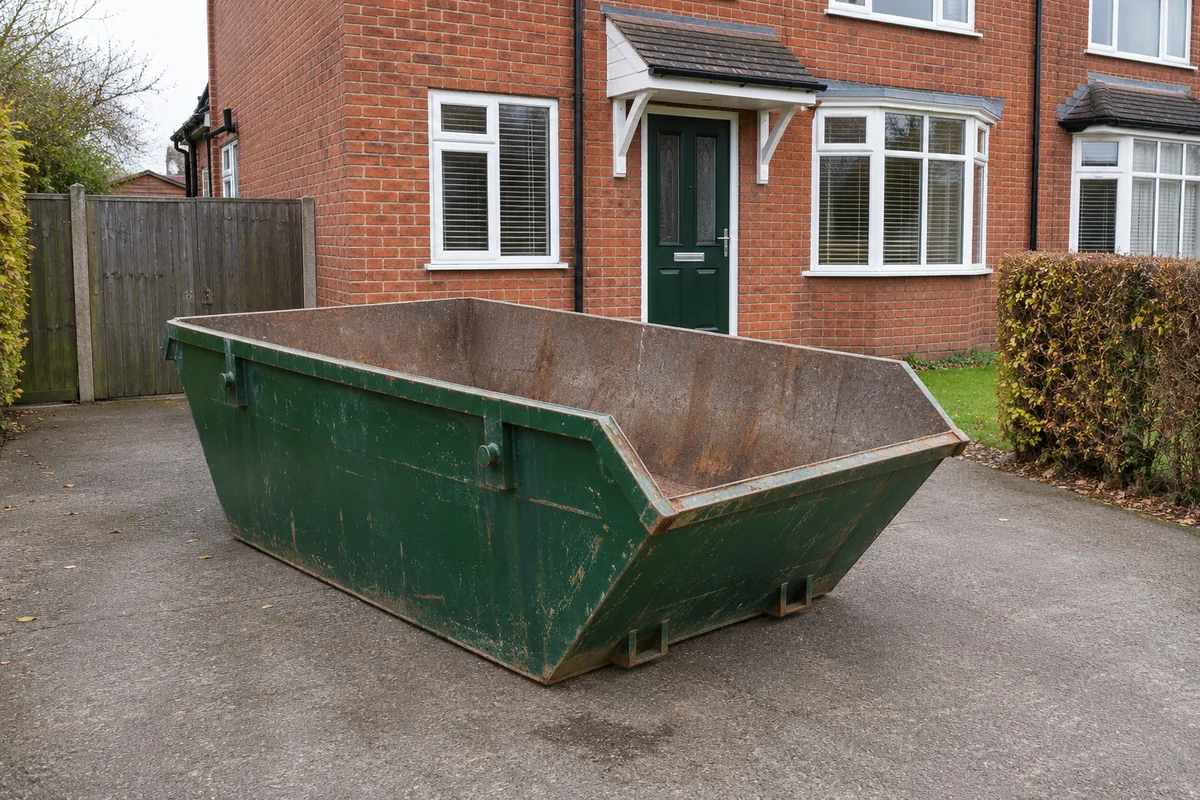
Old cupboards are only part of a kitchen-refit load. Plan space for worktops and packaging, keep appliances separate, and tell us about the full job before choosing your skip.
Count cupboards, worktops and new packaging
Start with what is actually being replaced. New doors on existing cupboards create far less waste than removing the whole kitchen. Count the base and wall units, tall cupboards, shelves, worktops and sink. Include flooring or wall tiles only if they are part of the job, rather than estimating from the room size alone.
Empty cupboards before the work starts. Food, cleaning products, batteries and forgotten small appliances need sorting before the old units come out. Keep anything being reused well away from the waste pile, including spare shelves or doors that may still be needed elsewhere.
- Old kitchen: list cupboards, doors, worktop lengths and fittings coming out.
- Room work: add tiles, flooring, wall coverings and board being removed.
- New deliveries: allow for boxes, wrapping and installation offcuts.
Check whether your kitchen fitter has already included waste removal. Agree which materials and packaging that covers before booking your own skip, so you do not pay for two arrangements for the same load.
Keep appliances out of the general skip
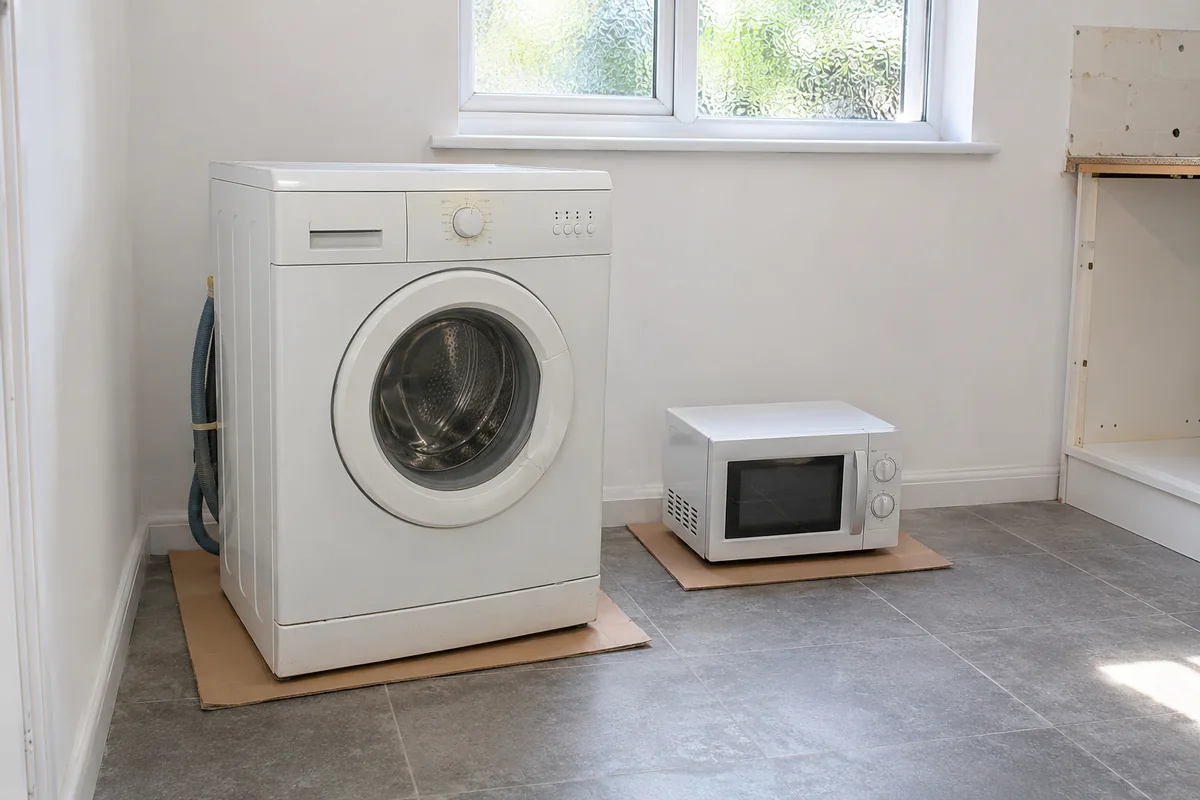
A washing machine, fridge, oven or microwave is not ordinary cupboard waste. Keep electrical appliances out of the general skip, including small items such as kettles, toasters and extractor fans. Write a separate appliance list so these do not get mixed into the refit rubbish when several people are clearing the room.
Zero Waste Scotland explains the separate reuse and recycling options in its guide to unwanted electrical items. If an item still works, arrange any handover before it is left in the way of the refit. A working appliance still needs a suitable recipient; do not assume a reuse organisation will accept it.
When ordering replacements, ask the retailer how its old-appliance take-back works, including collection charges and preparation. The government consumer guide to electrical recycling sets out the options. You can also check your council's current service, accepted items and access requirements.
Arrange safe disconnection with the appropriate tradesperson before removal. Skip delivery does not include disconnecting gas, electrical or water services, and a general skip booking does not reserve a separate appliance collection.
Separate plasterboard, heavy tiles and leftover products
Removing tiles or changing the layout can add materials that were not obvious when you counted cupboards. Tell us about plasterboard and plaster before booking, and keep them separate from the mixed load. The NetRegs plasterboard guidance explains why gypsum products must be separated from general waste.
Tiles, rubble and stone worktops add weight quickly. Describe their type and likely amount alongside the timber and packaging. Do not assume that spare space in the skip means more heavy material can be added; the agreed loading limit matters too.
Keep paint, oils, chemicals, batteries and liquids out of the general load. Leave unknown old boards or coatings alone until you have suitable advice about what they are. Our skip waste guide explains the ordinary contents and items that need a separate discussion.
Choose the skip for both space and weight
Compare a 6 yard skip for a Stirling kitchen refit when planning a load of agreed household and building waste. It is one useful starting point, rather than a fixed answer for every kitchen. The number of cupboards, the worktop material and any extra room work can change the choice.
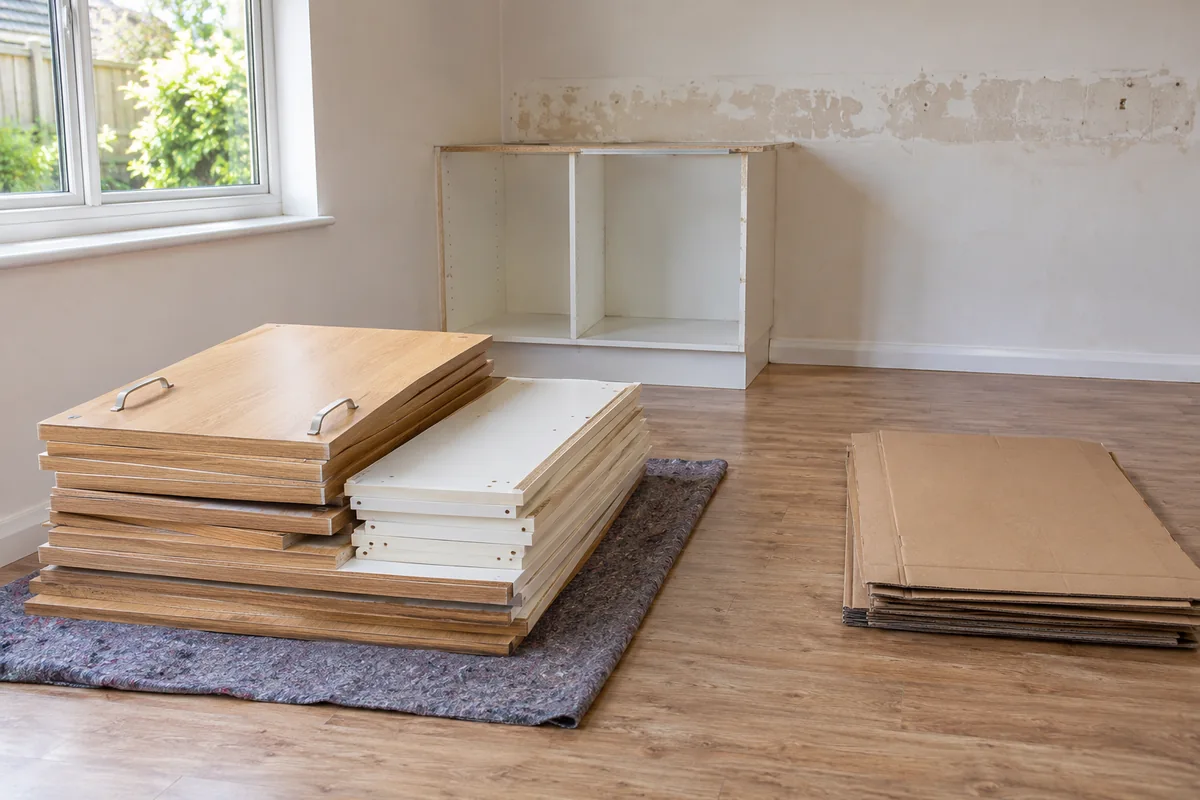
Whole cupboard boxes leave gaps when stacked, while dismantled panels take up space differently. Describe whether the units will come out whole and give the length of long worktops. Do not plan to make everything fit by smashing heavy materials or leaving pieces sticking over the sides.
Our skip-size comparison shows the 2, 4, 6, 8, 14, 20 and 40 yard choices. A smaller door-only job may need less room, while a larger refit may need more. Call with the waste list before choosing: extra capacity does not remove limits on heavy waste or the need for suitable delivery access.
Plan who loads it and keep the route clear
Ordinary skip hire gives you a container to fill. Agree who will remove the units, carry the waste outside and load it. Mention stairs, a narrow side passage or a shared entrance if carrying is difficult. Keep children and other household members away while units are being removed or waste is being loaded.
New kitchen deliveries can fill the same driveway you intended to use for the skip. Plan where the new units, old appliances and waste container will stand without blocking the house or the lorry approach. Our skip-delivery preparation guide covers the position and vehicle access to discuss before delivery.
Keep all waste below the rim and inside the sides, and leave the approach clear for collection. If you need a prepared pile lifted and loaded instead of filling a skip, ask about our separate rubbish-removal van collection. The items, carrying route and loading work are agreed in its quote; specialist waste and appliance disposal are not automatically included.
Get a quote for the complete kitchen job
Give us the kitchen waste list and tell us which items have a separate collection arranged. Include packaging that will arrive later, rather than describing only the old cupboards already outside. This helps us discuss the right skip and the dates you need it for.
- Your Stirling-area postcode and proposed skip position.
- The cupboards, worktops, tiles and other materials coming out.
- Any plasterboard, electrical items or uncertain materials kept separate.
- Preferred delivery date, likely hire length and who will load it.
- Any parking, gates, steps or shared-access difficulties.
Confirm the full price, included hire period, agreed contents and how to request collection. Our guide to skip-hire quote factors explains what can affect the cost. If the work expands after booking, call before adding a different waste type or more heavy material.
Doing the bathroom at the same time? Use the bathroom-refit waste checklist as well, and describe both rooms when you call. Keep one clear plan for the general skip load and the materials being collected separately.