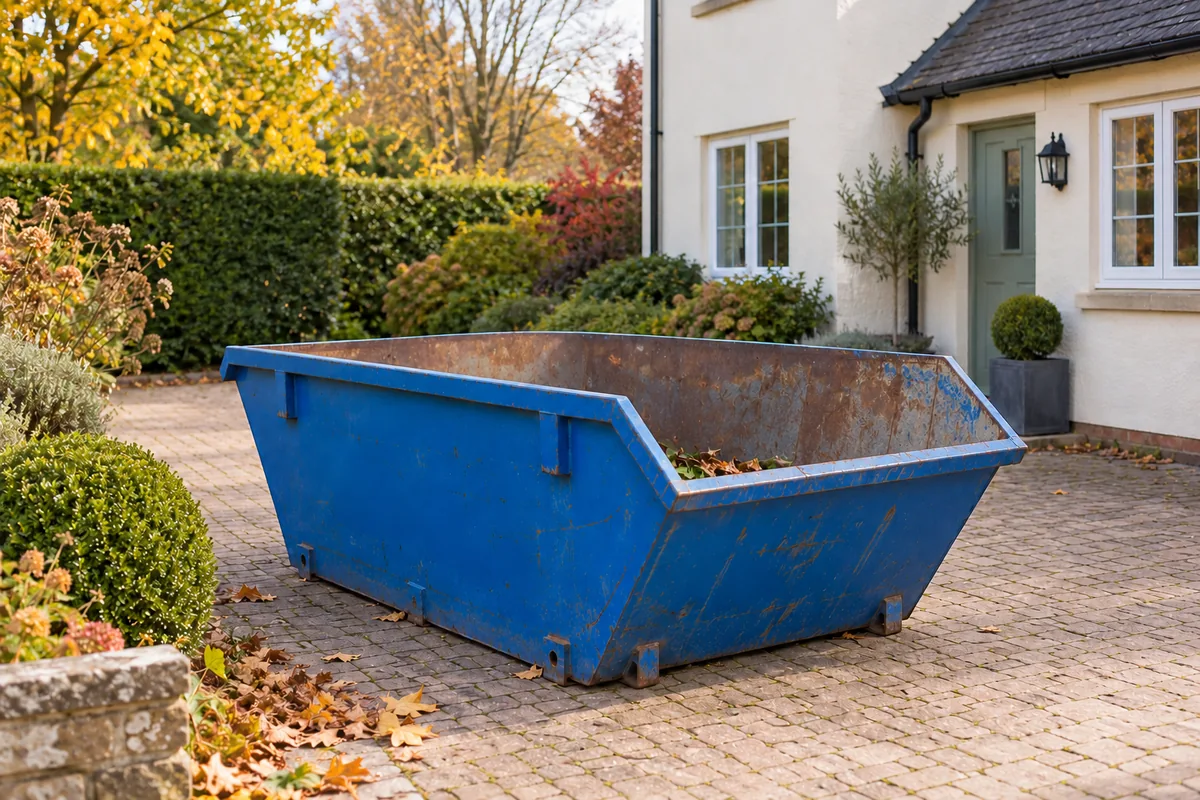
A hedge trim and a garden dig-out can produce very different loads. Before booking a skip in Stirling, separate light cuttings from soil, turf and large roots so the size and waste arrangements suit the job.
Start with a clear list of your garden waste
Walk around the whole garden before ordering. Include the waste you can already see and anything the work will uncover. Cutting back a hedge mainly creates branches and leaves; removing the hedge also brings roots and soil into the job. Replacing a path adds a different load again, with slabs, gravel or concrete that needs to be mentioned separately.
A useful starting list has three parts: green cuttings, heavy material and everything else. This helps you describe the job clearly without trying to guess a weight from a photograph. Keep pots, plastic packaging, old tools and leftover garden products apart while you decide what is going.
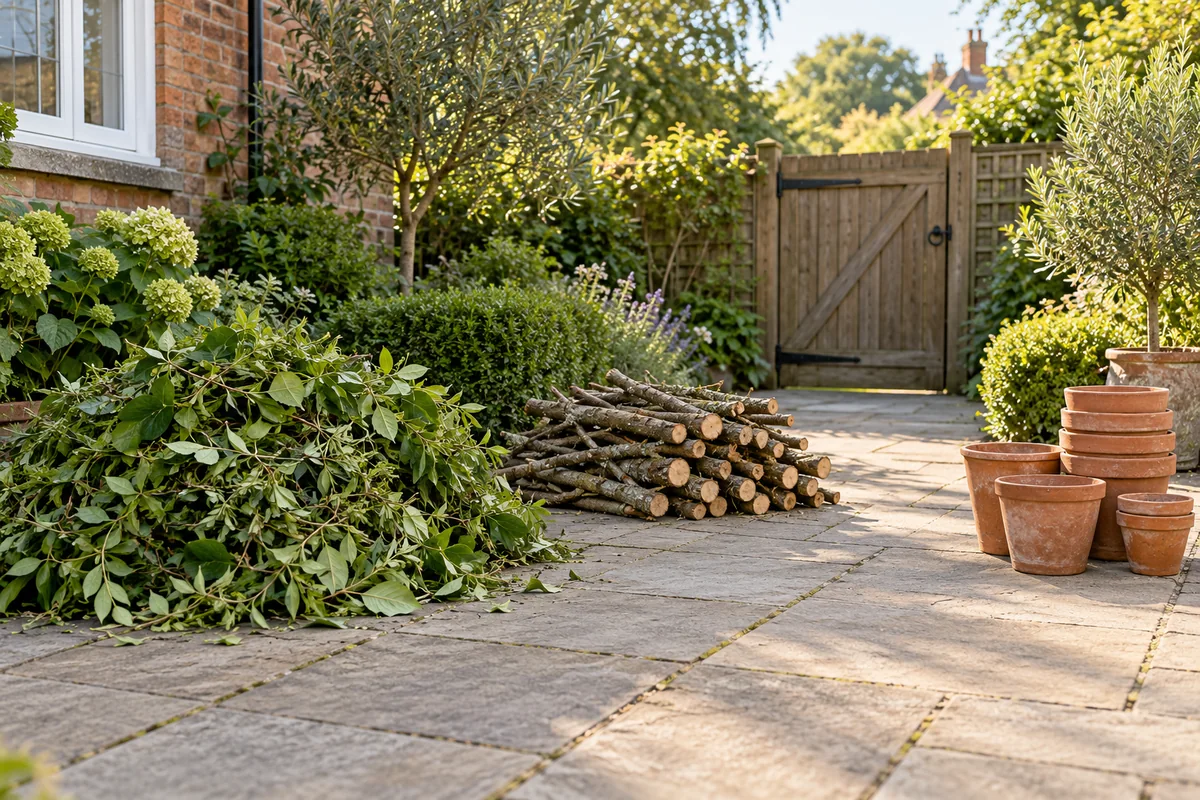
- Green cuttings: leaves, grass, hedge trimmings and small branches.
- Heavy material: soil, turf, stones and roots with earth attached.
- Other items: pots, fence panels, furniture or waste from a shed.
Tell us about all three groups when you call. If you decide to dig out a bed or remove paving as well, tell us before adding that material to the skip.
Soil, turf and roots change the load
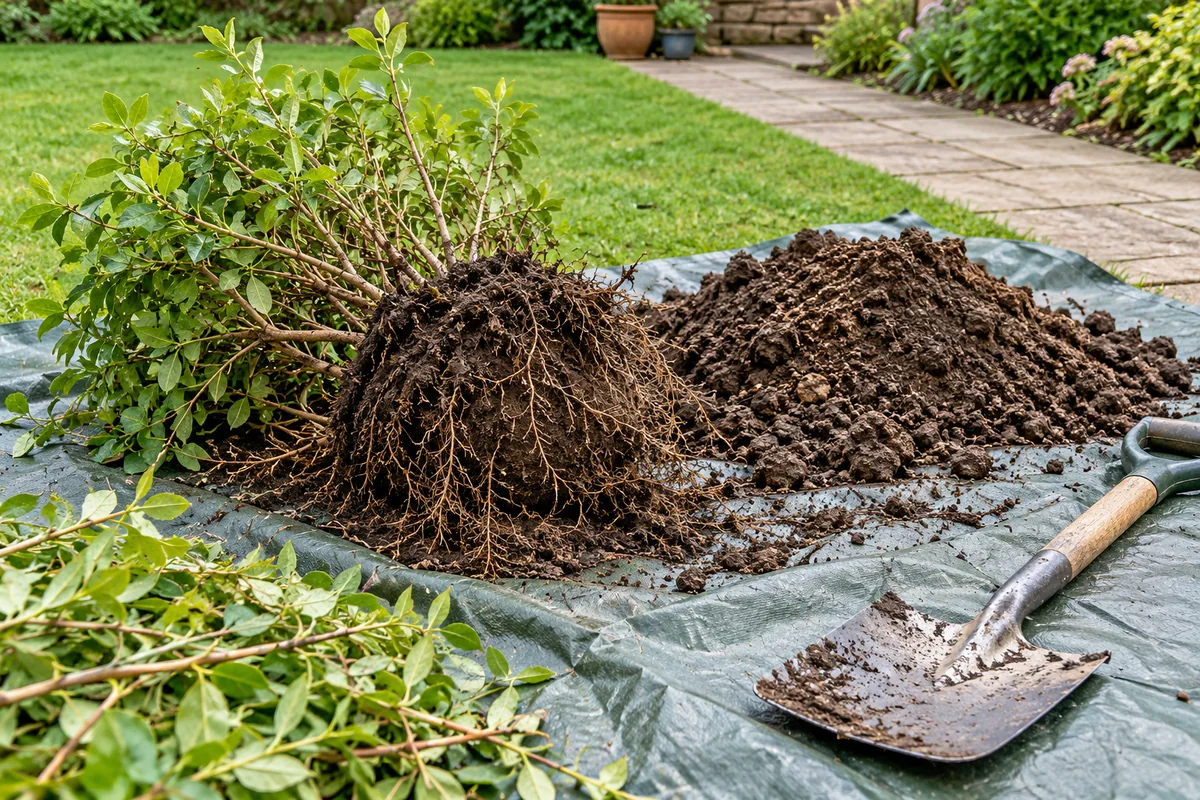
Loose branches can fill a large space while leaving gaps between them. Soil packs much more closely, and a modest-looking pile can be heavy. Turf includes the earth held beneath the grass, so rolls or strips from a lawn need to be described as turf rather than grass cuttings.
Roots are easy to underestimate. A shrub may look manageable above ground but have a wide rootball with a lot of soil attached. Give an approximate width and height for large roots or stumps, say whether they are still in the ground, and explain who will remove and load them. Skip hire does not include digging out a stump.
Do not assume that a bigger skip can take an unlimited amount of soil. The agreed weight and material limits still apply even when there is empty space above the load. Ask which size suits the amount you expect to excavate, and call again if the work reveals substantially more material.
Choose a skip for the material and the space
Our skip-size guide for Stirling compares the 2, 4, 6, 8, 14, 20 and 40 yard options. These sizes describe space inside the container. The right choice also depends on the waste type and the agreed weight limit.
For a small tidy-up, compare the mini and midi skips first. For a larger hedge cut or a mixed garden clearance, describe the length of hedge, the bulky items and any digging involved. Large containers are for agreed light, bulky loads; they are not the answer to a full load of soil or rubble.
Measure the proposed spot and explain the route the delivery lorry will take. A skip that fits on a driveway still needs suitable delivery and collection access. Mention a sloping drive, narrow entrance, shared access or low branches before a date is arranged. Our guide to preparing for skip delivery explains these checks in more detail.
Keep pots, products and unusual waste separate
Finding something in the garden does not make it green waste. Plastic pots, broken tools, treated timber, paving and bags of old products need to be described separately. Check our guide to what can go in a skip and agree the actual contents before loading. Do not pour leftover weedkiller, paint, oil or other liquids into a skip.
If you find unknown roofing sheets in a shed, leave them alone and seek specialist advice. Do not break them to make them fit. Likewise, if you suspect an invasive plant such as Japanese knotweed, stop moving the plant and surrounding soil and get specialist advice before clearing it. Keep it out of the skip.
You may also be able to keep some suitable material in the garden. Zero Waste Scotland’s home-composting guide explains how materials such as leaves, grass cuttings and woody trimmings can be composted. Decide what you will keep before estimating the load for collection.
Plan the loading route and keep below the rim
Ordinary skip hire means you load the container. Before delivery, work out how you will get waste from the back garden to the skip without blocking doors, a shared path or the pavement. Keep a clear route for anyone helping, and do not leave sharp branches pointing into the walking space.
Keep every part of the load below the rim, with nothing sticking out of the sides. Do not add boards to make the skip taller or stand on branches to force more into it. If long pieces will not fit safely, discuss the load rather than leaving them projecting over the edge.
If the carrying and loading are the main problem, ask about rubbish removal in Stirling. This is a separate van collection with the waste, lifting and access agreed in the quote. Our skip hire or rubbish removal comparison can help you choose between the two services before booking.
Have these details ready when you call
A clear description helps us discuss a suitable skip and quote without relying on a vague “garden rubbish” estimate. Tell us whether you are trimming, digging, replacing a fence or doing several jobs together. Mention any materials that you are unsure about before they are mixed into the pile.
- Your postcode and where the skip would stand.
- The main waste types, including soil, turf, roots and any paving.
- The approximate amount, with measurements for large piles or roots.
- Entrance width, ground conditions and any shared or restricted access.
- Your preferred hire dates and who will do the loading.
Confirm the agreed contents, loading limit, delivery arrangements and how to request collection. If the job changes, call before adding different waste or ordering another size. Keeping that conversation up to date is simpler than discovering at collection that the load does not match what was booked.