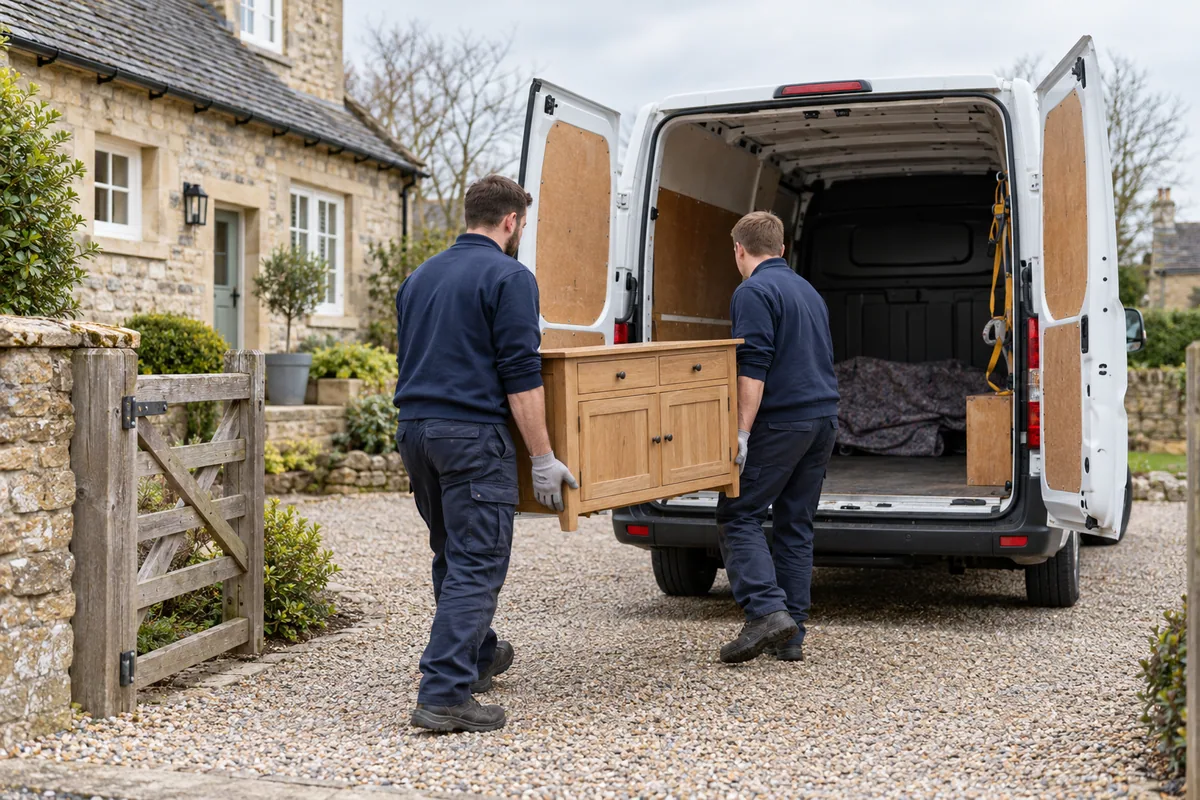
A skip and a rubbish collection both help you clear space, but they work differently. The best choice usually comes down to who will load the waste, when it will be ready and whether you have a suitable place to keep a skip.
Decide who will do the lifting and loading
With ordinary skip hire, the skip is delivered to an agreed spot and you fill it. This can work well when you or your tradespeople are already clearing rooms, working in the garden or removing old materials. You control the order in which things are loaded during the agreed hire period. Remember that carrying an item from the house to a skip is still part of the job, even when the skip is close to the door.
With our Stirling rubbish removal service, lifting and loading of the agreed items are included in the collection arrangement. Tell us where the items are, how large they are and whether there are stairs, tight doorways or a long carry. A clear description helps the quote allow for the actual work. Do not assume that a collection includes dismantling fitted furniture or carrying exceptionally heavy objects unless this has been agreed.
Think about when the waste will be ready
A skip is useful when rubbish will build up over several days. During a kitchen refit, for example, old materials may come out in stages. You can add the agreed waste as the work progresses, keeping the working area clearer. The normal hire period is up to seven days unless another arrangement is made. Tell the team if the job is likely to run longer, so the dates and any extra cost are clear before booking.
A rubbish collection is often convenient when the items are already identified and ready to leave. You agree what is being taken, arrange access and have the load removed during the collection visit. It is less suited to a job where you are still deciding what to keep or where more waste will appear after the vehicle has gone. If the clear-out is in stages, explain that when discussing the collection options.
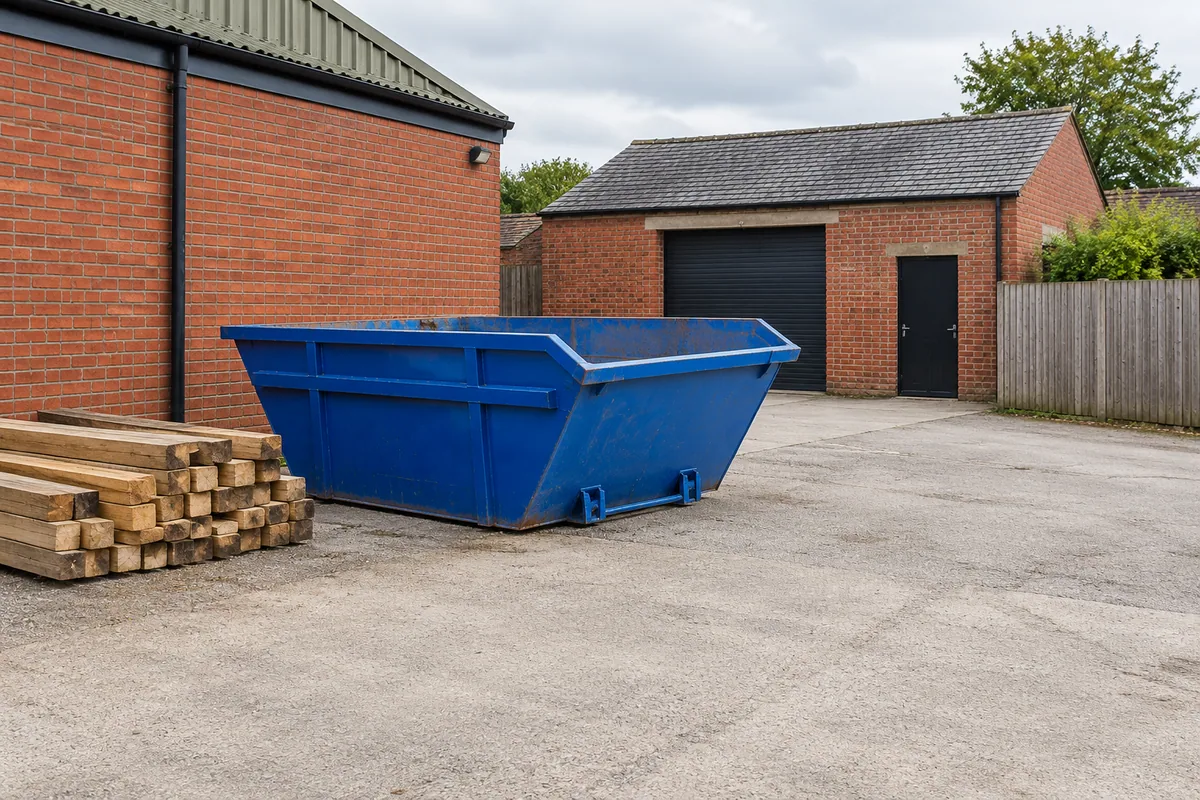
Look at the space outside your property
A driveway can make skip hire straightforward, but the delivery lorry needs room as well as the skip. The surface, entrance width, turning space and overhead obstructions all matter. A small front garden does not automatically provide a safe place for a skip. Describe the property and access before booking, and read our skip-delivery preparation guide for the details that are useful to have ready.
If the skip must stay on the public road, council permission needs to be in place first. A van collection may avoid leaving a skip outside, but the vehicle still needs a safe, practical stopping place. Parking restrictions and access rules do not disappear just because a collection is short. Tell the team about busy streets, shared entrances and restricted parking so the visit can be planned around the actual address.
Check the amount and type of waste
A few bulky household items may be easier to describe for a van collection than to match to a skip. A larger renovation can make a skip more practical, especially when tradespeople can fill it as they work. For a house clearance, list the furniture as well as the bags. Our guide to choosing a skip for a house clearance explains why loose volume and heavy materials need to be considered separately.
Whichever service you choose, discuss restricted items in advance. Electrical appliances, paint, batteries, gas cylinders and suspected asbestos do not belong in a general mixed-waste skip. Plasterboard, mattresses and carpets also need to be raised before booking. A rubbish collection is not an automatic specialist-disposal service for every item. Tell us exactly what you have so we can explain what can be collected and what needs another arrangement.
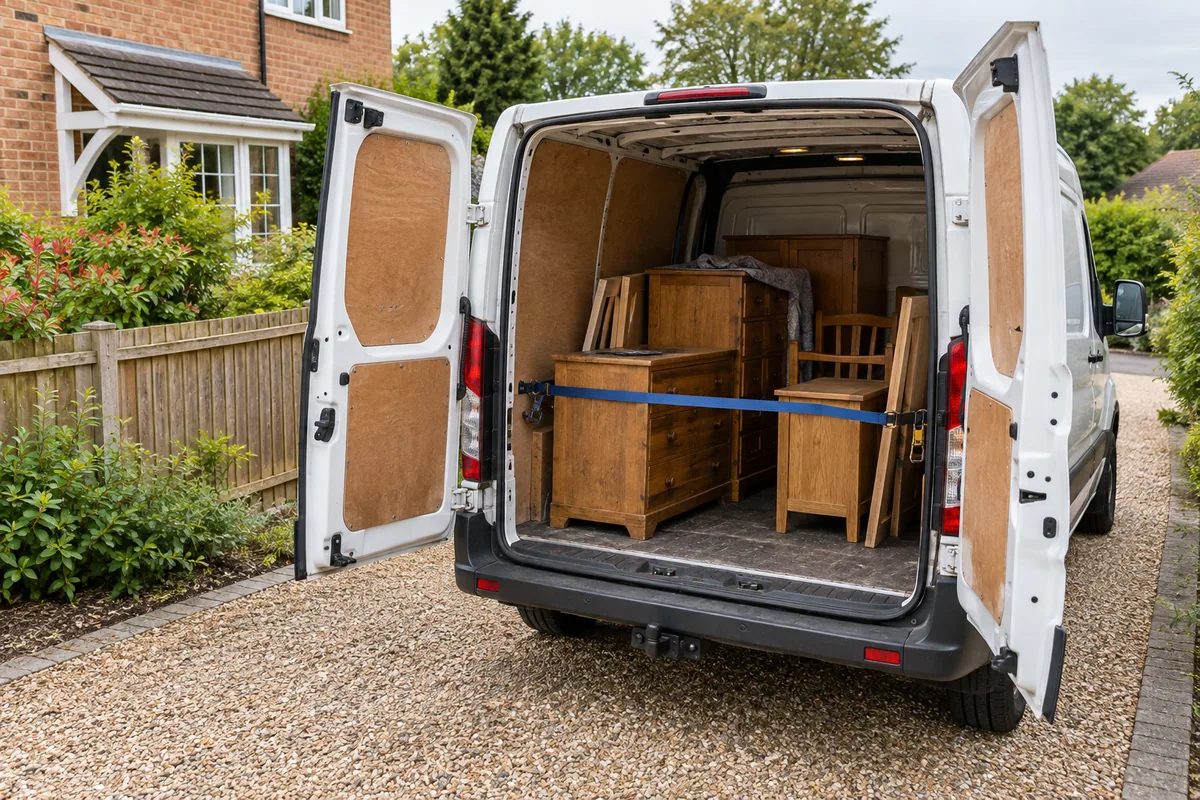
Compare what each quote includes
A skip quote is affected by size, postcode, waste, hire length and any road-permit arrangements. A rubbish-removal quote also needs to account for the lifting and loading involved, the distance to carry items and access such as stairs. An apparently cheaper quote may cover less work. Ask for the full amount including VAT and any agreed extras, and make sure the waste list is the same when comparing the alternatives.
Think about the work you would otherwise do yourself. If filling a skip means several people carrying furniture for an afternoon, loading help may be useful. If you already have a team working on a renovation, a skip can give them a place for waste throughout the job. Neither option is always cheaper or better. The useful comparison is between two arrangements that will actually clear the same waste from the same place.
Choose the option that fits your clear-out
Choose a skip when you want time to fill it, can manage the loading and have suitable access and placement. Choose a rubbish collection when the agreed items are ready and you want the lifting and loading handled as part of the visit. A wait-and-load skip is another option when your waste can be loaded quickly during an agreed waiting period. It still requires safe access and enough people ready to do the loading.
To arrange skip hire in Stirling or discuss a collection, call with your postcode, a waste list and the date you have in mind. Let us know about stairs, parking and any items you are unsure about. We can talk through the practical choice and confirm a quote before you book. Keep the route clear on the day and make sure everyone helping knows which items are going.