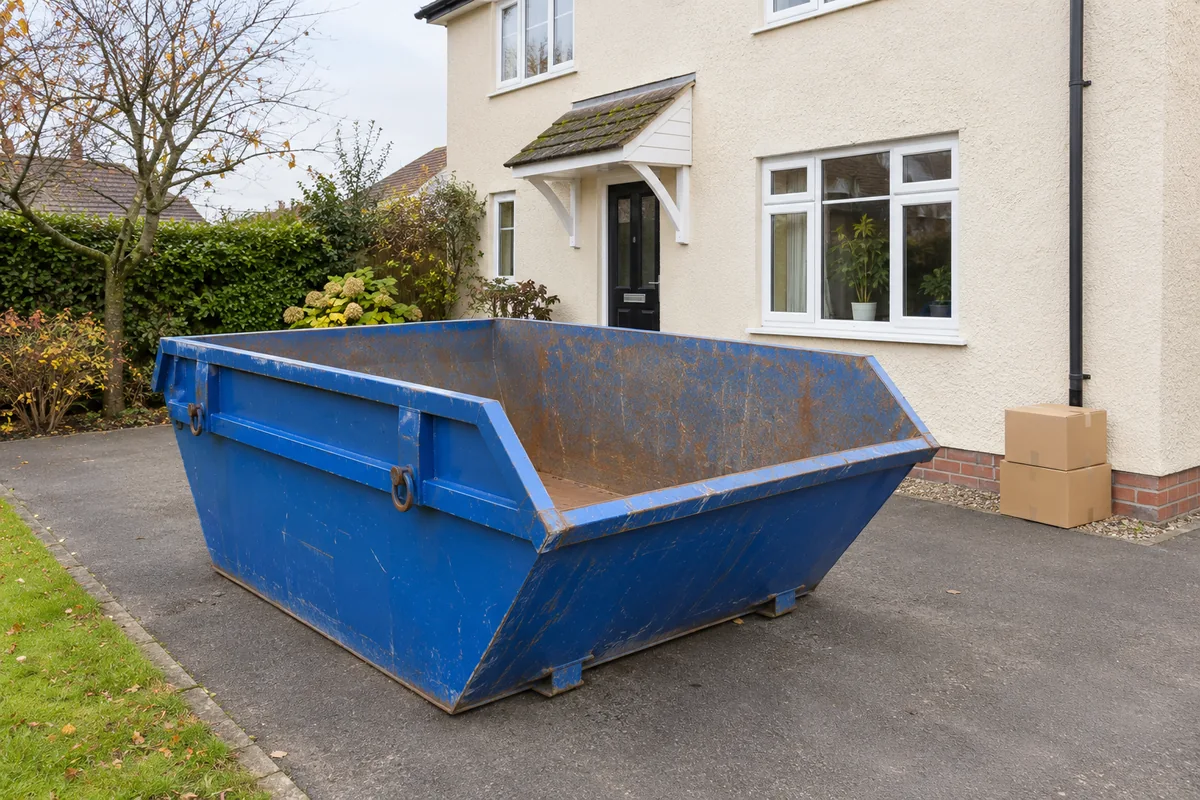
A bathroom refit produces several kinds of waste. Agree what is coming out, keep plasterboard and restricted items separate, and choose a skip for the amount and weight you expect.
List everything coming out of the bathroom
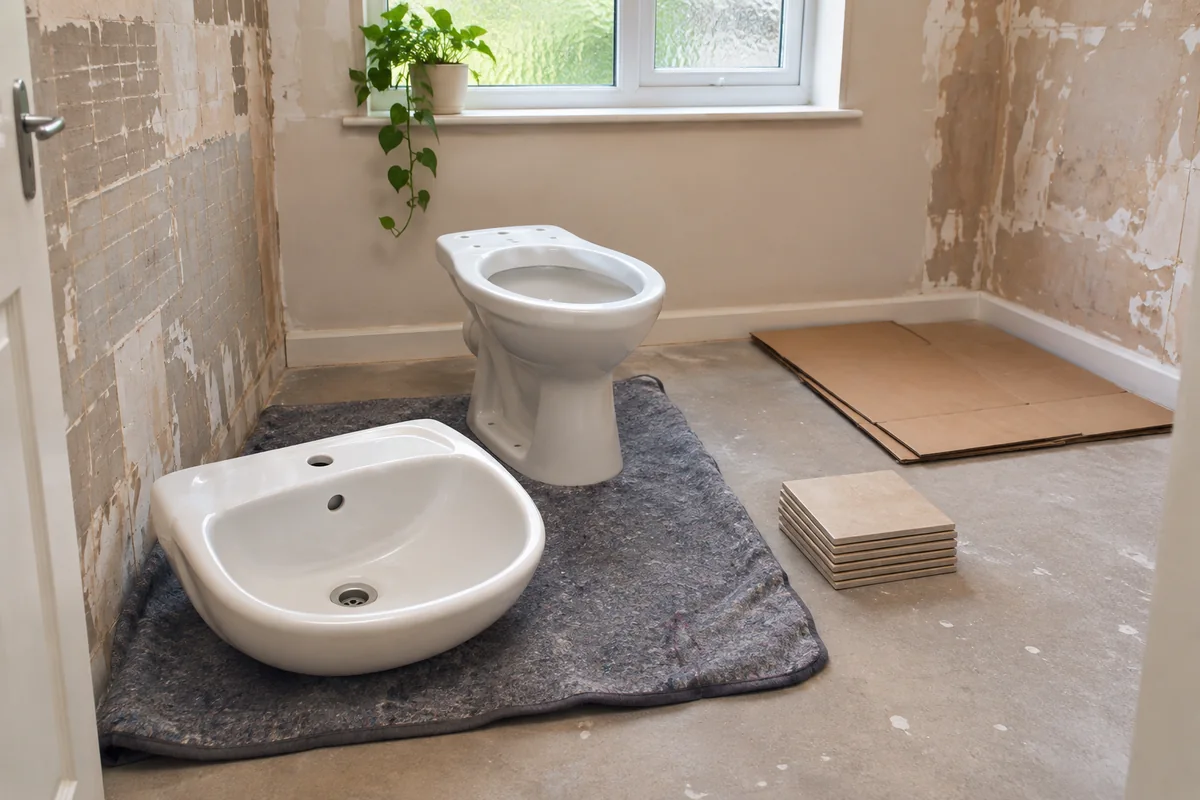
Write down the work before choosing a skip. Replacing a basin and cupboard creates a different load from removing a bath, floor tiles and wall coverings. Include the packaging from new fittings as well as the old materials; boxes can take up room after the first pile of rubbish has been cleared.
Agree who is handling the waste with the person fitting the bathroom. If removal is already included in their work, clarify what that covers before ordering a separate skip. Ordinary skip hire provides a container you load; removing connected fittings, disconnecting services and carrying items downstairs are separate jobs to arrange.
- Old fittings: bath, basin, toilet, cupboards and shower parts being replaced.
- Room materials: tiles, flooring, wall coverings and any board being removed.
- New-product waste: boxes, wrapping and installation offcuts.
Set aside anything staying in use before the room is emptied. Keep the list handy when calling so we can agree the waste and discuss the right container for your Stirling address.
Keep plasterboard out of the mixed load
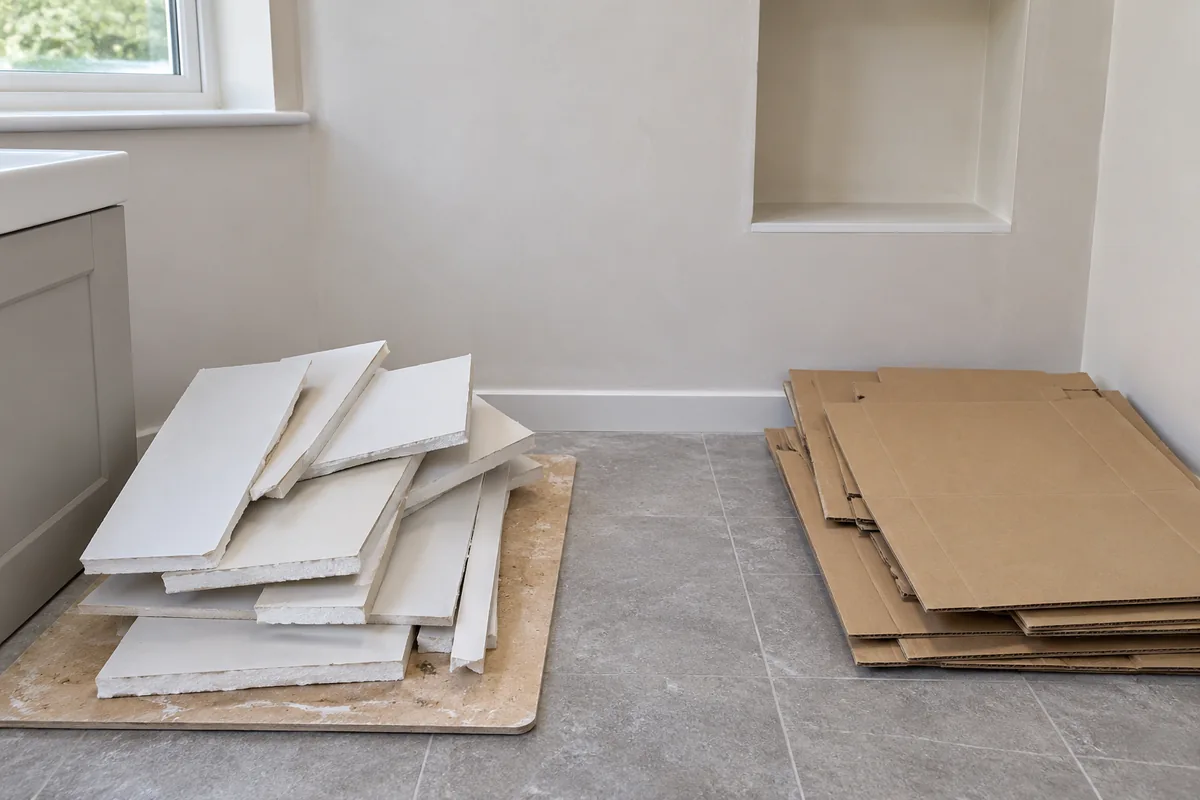
Tell us before booking if the refit includes plasterboard or plaster waste. Keep it separate from tiles, timber, packaging and the rest of the rubbish rather than adding it at the end of a mixed load. Include both old board and new offcuts when estimating how much there will be.
Plasterboard contains gypsum. The official NetRegs guidance on plaster and plasterboard waste explains that gypsum products must be separated from general waste. It also says not to wash plaster into drains or surface water. Agree the collection arrangements before filling the skip.
Ask the fitter to identify the boards being removed if you are unsure what they are. Do not assume every wall panel is plasterboard or that all boards can go together. Our guide to what can go in a skip explains the ordinary waste scope and the materials to discuss separately.
Set aside electrical items, liquids and unknown materials
A bathroom can contain more electrical equipment than the first waste pile suggests. Mention old extractor fans, electric showers, lights and illuminated mirrors when describing the job. These need a separate disposal arrangement and should not be hidden beneath the ordinary rubbish.
- Electrical fittings: keep appliances and electrical parts out of the general load.
- Leftover products: do not put paint, oils, chemicals or liquids into the skip.
- Unknown old materials: stop and get advice before disturbing or loading anything suspect.
Old flooring, boards or coatings may need checking before removal. If asbestos is suspected, leave the material undisturbed and get professional advice. The HSE asbestos FAQs explain why identification and work on suspect materials need proper expertise. Do not break a piece off to test it yourself, and never mix suspected asbestos into the skip.
Allow for the weight of tiles and fittings
Ceramic basins, toilets and old tiles can make a heavy load even when the pile looks quite small. Cupboards and packaging use space differently. Describe both the bulky pieces and the heavy materials so the size choice is based on the whole refit, with the contents and loading limit agreed.
A 4 yard skip for a Stirling bathroom refit is an option to compare for a modest amount of agreed waste. The right choice still depends on what is being removed and the space available. Removing all the old fittings and finishes, replacing extensive tiling or doing other work in the house may add much more waste.
Measure awkward items such as a bath or a long cupboard panel rather than assuming they will fit. Our skip-size guide compares the 2, 4, 6, 8, 14, 20 and 40 yard choices. A larger container does not give an unlimited allowance for heavy tiles or rubble; call with the materials and likely amount before choosing.
Plan the carrying route and skip position
Decide who will bring the waste out of the bathroom and load the skip. An upstairs room, narrow landing or shared entrance can make the carrying work harder than the amount of rubbish suggests. Explain those details if you need loading help rather than assuming it is part of ordinary skip hire.
Keep the route clear of boxes and loose offcuts while the job is under way. The skip position should allow continued access to the house, garage and any shared path. Our guide to preparing for skip delivery covers the driveway, lorry approach and placement details to sort out beforehand.
Only load the agreed waste, below the rim and within the sides. Do not let long panels project over an edge or climb into the skip to press rubbish down. If the load is reaching its limit before the refit is finished, call about the remaining waste. Keep the lorry approach clear when arranging collection.
Have these details ready for your quote
Call with the project details before arranging delivery. Give one waste list for the agreed general load and a separate list for plasterboard, electrical items and anything uncertain. This makes it easier to discuss the size and any other arrangements while the materials are still separate.
- Your postcode and where the skip would stand.
- The fittings and room materials being removed.
- The approximate amount of tiles, board and bulky items.
- Your preferred dates and who will load the skip.
- Stairs, carrying distance, gates or shared access.
If lifting and loading are the main problem, ask about our separate rubbish-removal van service. The items, carrying route and loading work are agreed in the quote. Specialist waste is not automatically included. Our skip-hire and rubbish-removal comparison explains how the two services work.
Confirm the included hire period, full price, agreed contents and how to request collection before booking. The guide to skip-hire quote factors explains what can affect the price. Tell everyone working on the bathroom what can go in the skip, and call if the waste or dates change.