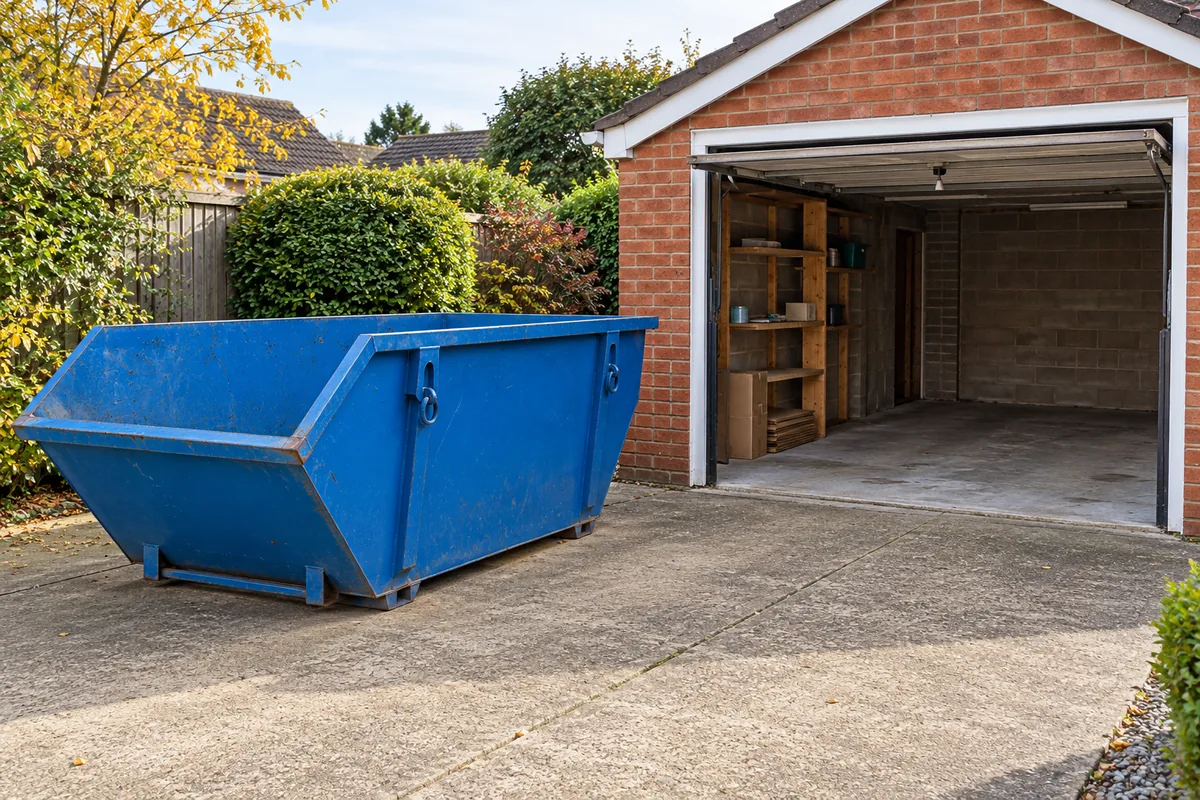
Garages often hold more than boxes and old shelves. Sort the ordinary rubbish from paint, oil, electrical items and anything unknown before booking a skip for your Stirling clear-out.
Sort the garage before ordering a skip
Start at the doorway and make a list before pulling everything onto the driveway. Include what is on shelves, behind cupboards and stored overhead. A few large items can hide a surprising amount of loose rubbish, so choosing a skip from the first visible pile may leave you short of space.
Decide what will stay, what someone else can use and what needs disposal. Keep useful tools, personal papers, keys and spare parts in a clear area away from the rubbish. If several people are helping, agree which shelves and cupboards they can empty rather than relying on everyone recognising what matters.
List ordinary unwanted furniture, cardboard, timber and other materials separately from electrical items, liquids and anything you cannot identify. We agree the contents before booking. Our house-clearance skip guide helps with estimating a wider clear-out, but garage contents need this extra sorting step before you start loading.
Keep paint, oil and electrical items separate
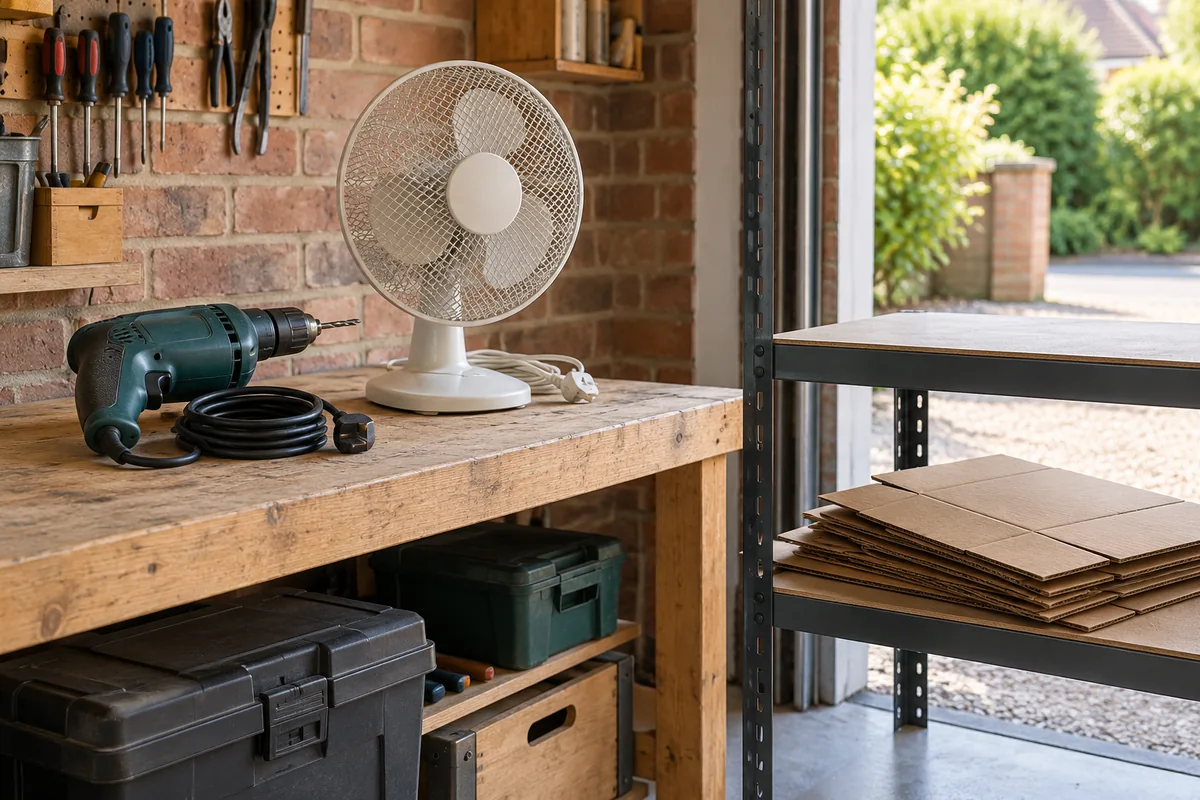
An old garage can contain leftover decorating products, car-care materials and broken equipment. Keep these out of a general-waste skip, even when you are loading other household rubbish. Tell us exactly what you have, including containers that still hold something, rather than describing the whole lot as household rubbish.
- Paint, oil and chemicals: keep leftover products and unknown liquids out of the general load.
- Batteries and gas cylinders: identify them separately when planning disposal.
- Electrical items: keep old tools, heaters, fridges and other appliances apart from ordinary rubbish.
Do not pour liquids into the skip, onto the ground or down a drain. Do not assume a container is suitable for the general load just because it looks nearly empty. If a product or container is unknown, leave it alone and seek advice before moving or opening it.
The official NetRegs guidance for unusual household waste explains why materials found in garages may need a separate disposal route. Contact your council or a specialist waste service about items that cannot go in the skip. A van collection does not automatically include specialist disposal.
Leave unknown roofing sheets alone
If you find old roofing sheets, insulation or building panels that may contain asbestos, stop before disturbing them. Do not break a piece off to inspect it or cut it smaller to fit a skip. Keep the clear-out away from the suspect material while you get professional advice.
Appearance alone is not a reliable way to decide what an old sheet contains. The HSE asbestos FAQs advise using trained professionals to repair or remove asbestos-containing materials. Asbestos must not be mixed with ordinary household waste.
Tell us about anything unexpected before adding it to the load. Asbestos removal, chemical disposal and work on the building need separate arrangements. Do not add unknown materials while waiting for advice.
Match the skip to the rubbish left
Choose the size after setting aside items you are keeping and materials needing separate arrangements. A 4 yard skip for a Stirling clear-out is an option to compare for a modest amount of ordinary garage rubbish. The right size still depends on the amount, shape and weight of your rubbish.
Describe bulky cupboards, long shelf boards and other awkward pieces as well as bags. Measure large items where you can. A tall cupboard may be difficult to load into a small skip even if the rest is loose cardboard. Do not assume dismantling fitted furniture or taking down shelving is part of the hire service.
Our full skip-size comparison covers 2, 4, 6, 8, 14, 20 and 40 yard choices. Space and weight are different limits. Mention paving, rubble, soil or other heavy material separately, and agree the load before choosing a larger container just because it looks roomy.
Keep a clear route and load below the rim
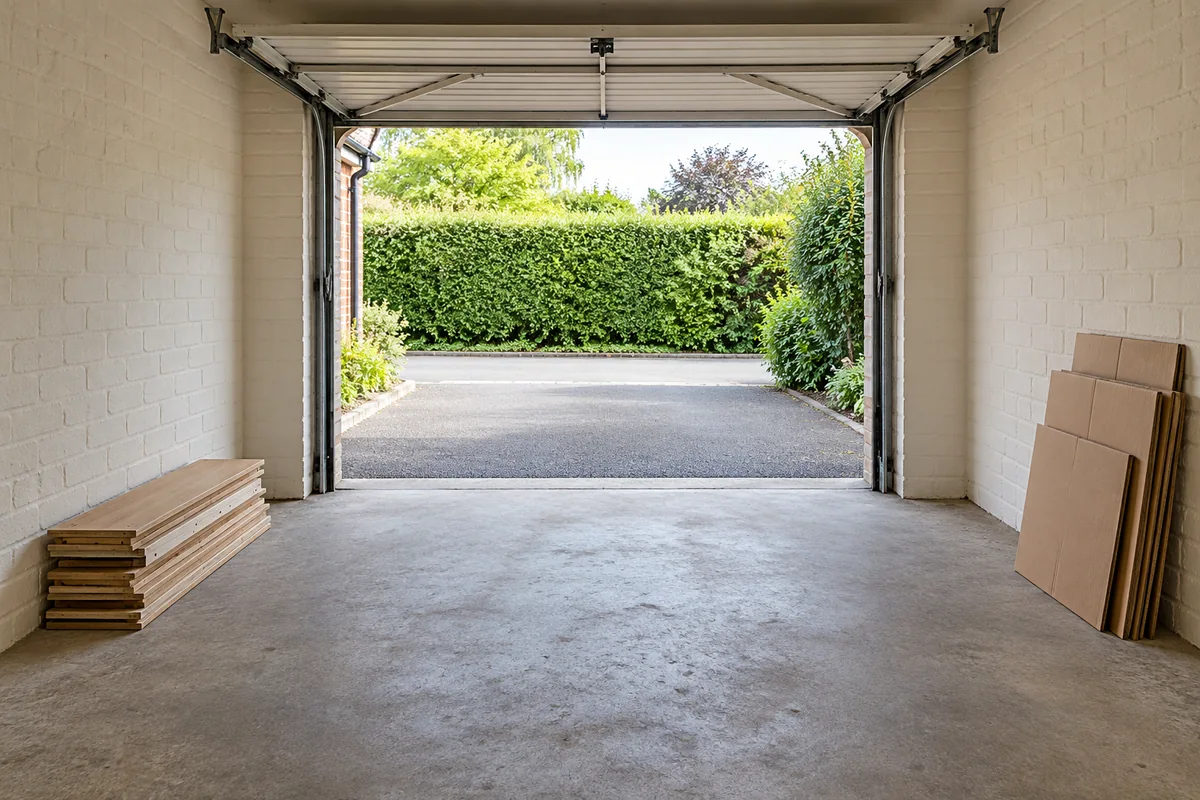
Ordinary skip hire means you do the lifting and loading. Leave a clear route from the garage to the agreed skip position, with enough room to carry items without catching doors, cars or stored belongings. Keep loose cables, small tools and packaging out of that route while the work is under way.
Load only the agreed waste, below the rim and within the sides. Long boards must not stick out over the edge. Do not add boards to increase the sides, climb into the skip to press rubbish down or force an item in when it will not fit safely. Call about the remaining waste if the skip is filling sooner than expected.
Keep access available for collection as well as delivery. A skip sitting across the garage door can prevent you reaching the remaining items, while parked vehicles can block the lorry later. Our skip-delivery preparation guide explains what to check about the driveway, approach and proposed position.
Get a quote for the load and the loading
Call with a clear description so we can discuss a suitable size, access and quote for your job. Keep your list of restricted or uncertain items separate from the ordinary rubbish list. Do not wait until collection day to mention something that was not agreed.
- Your postcode and proposed skip position.
- The ordinary waste types and approximate amount.
- Large items, heavy materials and anything needing another disposal route.
- Your preferred dates and the space available for the lorry.
- Who will carry the rubbish out and load it.
If lifting and loading are the main obstacle, ask about our separate rubbish-removal van service. We agree the items, carrying route and loading work in the quote. Tell us about the separate items as well, so the quote describes the agreed collection.
Our skip or rubbish-removal comparison explains the difference, while the guide to skip-hire quote factors helps you prepare the details. Before booking, confirm the agreed contents, hire period, full price and how to request collection. Keep that information handy while you finish the clear-out.