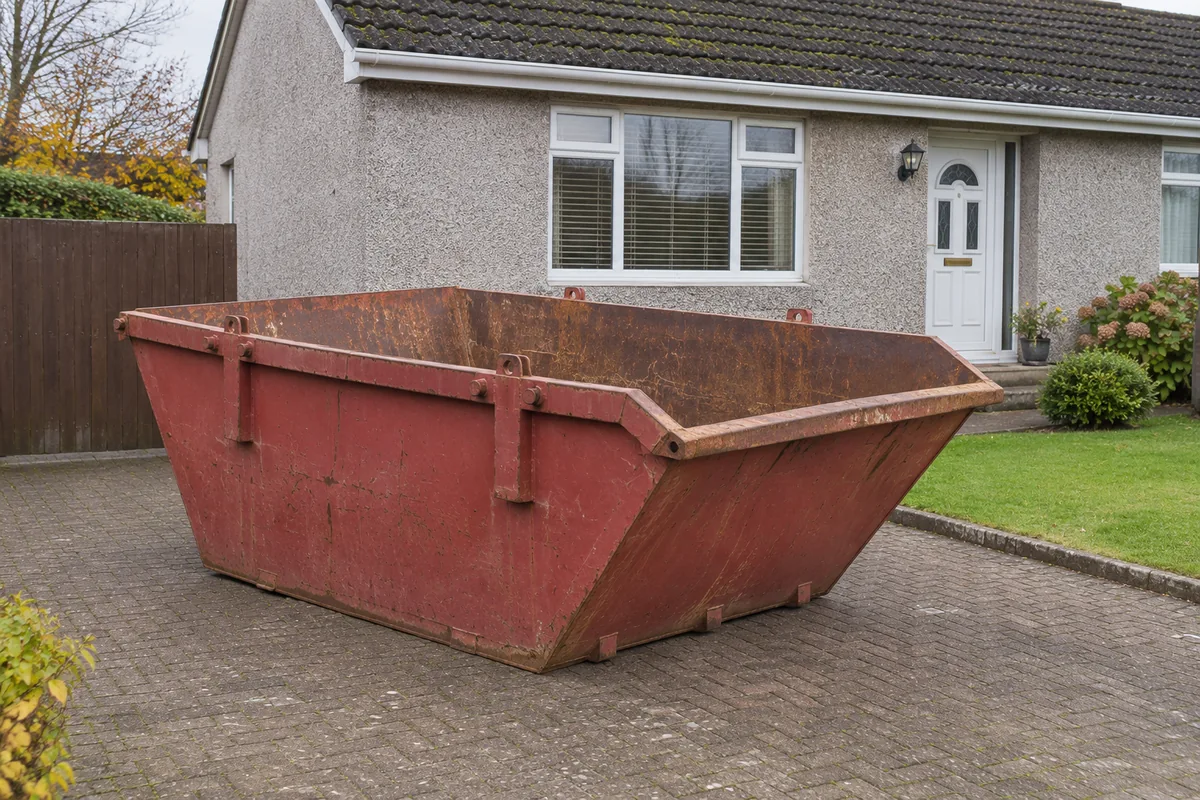
A small pile can be heavy, while a large pile can be mostly empty space. Tell us what the waste is, as well as how much there is, before choosing your skip.
Skip size measures space, not a weight allowance
A skip described as 8 cubic yards gives you a guide to the space inside it. The number does not mean eight tonnes, and it does not tell you how much of every material can be loaded. The waste type and agreed loading limit still matter, even when there is plenty of room left.
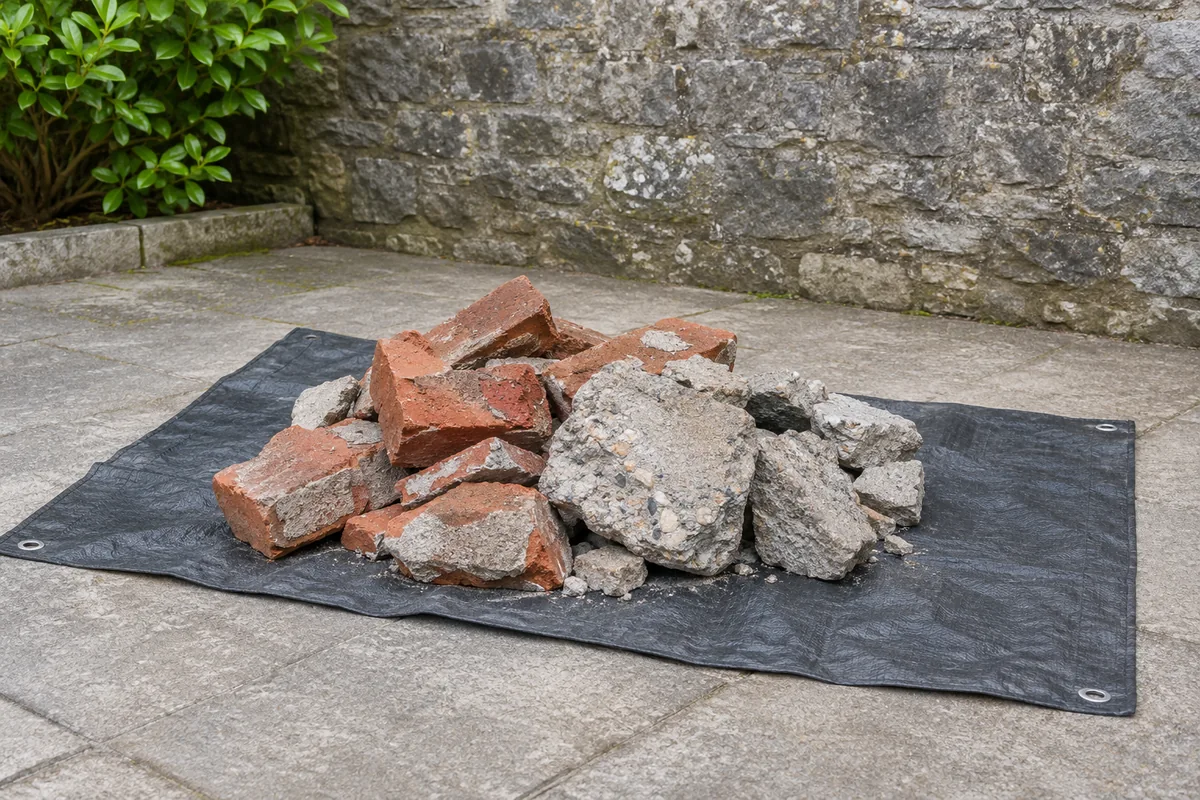
Think of an empty delivery box beside a few broken paving slabs. The box may look larger but weigh much less. That is why judging only the height of a waste pile can lead to the wrong booking. A photograph or description should make clear what the pile contains, not just how big it looks.
The HSE guidance on waste-container lifting explains that different materials create a wide range of load weights. For your booking, the useful step is to describe the materials before agreeing the size and limits; the skip name alone does not tell you its weight limit.
Tell us about rubble, soil and heavy fittings
Bricks, concrete, soil, tiles and stone can add weight quickly. Mention them at the start of the call, including when they are only one part of a larger clear-out. A few bags of old tiles alongside cupboards need a different discussion from a pile made almost entirely of broken paving.
Give the best description you can without trying to weigh everything yourself. Explain which job produced the waste, how much paving or flooring is coming up, and whether soil is included. If the work has not started, tell us which amounts are estimates.
- Garden work: distinguish cuttings and branches from dug-out soil, turf and paving.
- Room refits: mention heavy tiles, sinks and stone worktops alongside cupboards or packaging.
- Building work: describe bricks and concrete separately from timber and other rubbish.
Do not order the largest container simply to avoid running out of room for heavy waste. Call first so the material, amount and suitable collection arrangement can be agreed.
Allow for the shape of bulky items
Bulky waste uses space because of its shape as well as its material. Empty boxes, whole cupboard units and long timber pieces can leave gaps between them. A pile that looks manageable on the floor may be awkward to place inside the skip without projecting over a side.
Measure the longest or widest pieces and explain whether cupboards will be removed whole or dismantled by the person doing the work. Flatten ordinary empty cardboard where practical. Do not cut up unfamiliar materials or smash heavy fittings just to make them fit, and do not plan to climb into the skip to press the load down.
Lightweight does not automatically mean accepted. Keep electrical items, batteries, paint, oils, gas cylinders and other restricted waste out of the general load. Agree plasterboard, carpets or mattresses separately. Our guide to what can go in a skip explains the ordinary contents and items to discuss before booking.
Choose a size for the whole mixed load
For a renovation or clear-out with agreed household and building waste, compare our 8 yard skip in Stirling. Its suitability depends on the actual materials, amount and access. Tell us about soil or rubble before booking so we can agree the right container and loading limit.
Make one list of the whole job rather than adding separate guesses for each room. Include waste arriving later, such as packaging from new products and installation offcuts. If a kitchen refit is involved, our kitchen-waste and appliance guide helps you separate the general load from items needing another collection route.
The skip-size comparison brings together the 2, 4, 6, 8, 14, 20 and 40 yard options. Use it to compare space, then call with the contents. A bigger skip also needs suitable placement and lorry access; more capacity does not remove the weight or waste-type restrictions.

Keep loading and collection safe
Skip hire supplies a container that you fill. Decide who will carry the waste, including heavy pieces and items coming downstairs. Keep the route clear and keep other people away while loading. If you need a pile lifted and loaded, our separate rubbish-removal van service has its own agreed items, access and loading quote.
Keep the load below the rim and within the sides. Do not build up the edges with boards to create extra height. If the agreed amount or loading limit is being reached, stop and call about the remaining waste rather than adding more because a gap is still visible.
Leave the approach clear for the collection vehicle and keep away while the skip is being lifted or moved. The HSE guidance also stresses keeping people clear of waste-vehicle lifting operations. Our delivery and access checklist covers the driveway and approach details to sort out before the skip arrives.
Describe your load before booking
A useful quote starts with a clear picture of the rubbish, the address and the work involved. You do not need a perfect volume calculation. Describe the project and any large or heavy items, and tell us what remains uncertain so we can discuss the choice before delivery.
- The materials: for example timber, cardboard, tiles, concrete or soil.
- The approximate amount and dimensions of awkward pieces.
- Restricted items being kept separate from the general load.
- Your postcode, proposed position and access for the lorry.
- Preferred dates, hire period and who will load the skip.
Confirm the full price, included hire period, agreed contents, loading limit and collection arrangements. Our guide to skip-hire quote factors explains why two prices need to cover the same job before they can be compared.
The Scottish Government guidance for householders also explains checking the waste transporter's registration through SEPA and asking where the waste will go. Keep waste stored safely while waiting for collection, and call if the contents or amount change after booking.